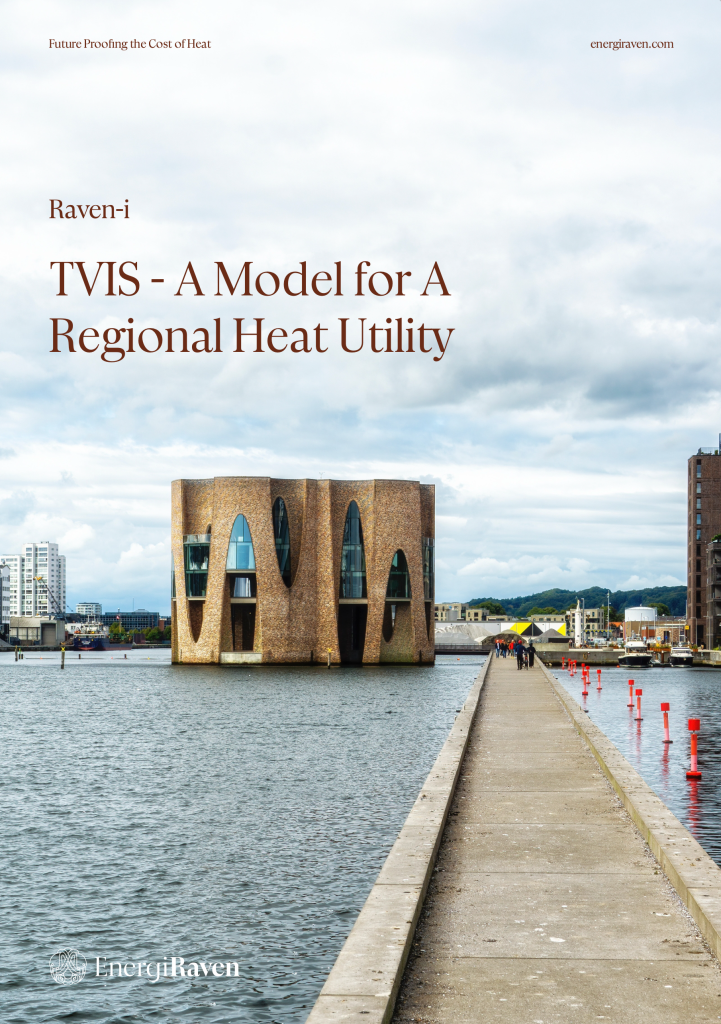
Delivering Regional Heat: What Britain Can Learn from Denmark
For decades, energy policy has focused on how we generate heat. Denmark’s TVIS network shows that the bigger opportunity may be how we move it.
In our latest Raven-i, we explore how four Danish municipalities created a shared heat transmission network that connects industrial waste heat, power generation and energy-from-waste facilities to local district heating systems. Today, the network serves heat demand equivalent to around 150,000 households.
What makes TVIS significant is not the technology behind it, but the infrastructure. Rather than relying on a single heat source, the network connects multiple sources into one regional system, creating flexibility, resilience and long-term efficiency.
The paper examines how Denmark transformed heat from a local utility issue into a regional infrastructure challenge. By creating a transmission network between producers and consumers, TVIS turned surplus heat that would otherwise be wasted into a valuable public resource.
For Britain, the lessons are increasingly relevant. Data centres, industry, wastewater treatment works and power generation all produce recoverable heat, yet much of it remains unused because the infrastructure needed to transport it does not exist.
A central theme throughout the report is that great infrastructure should not depend on selecting a winning technology. It should create the conditions for technologies to evolve. Heat sources may change over time, but the infrastructure connecting them should endure.
As Britain looks to strengthen energy security, reduce costs and accelerate decarbonisation, the question is no longer simply how we generate heat. It is how effectively we connect it.
Read the Full White Paper
Discover how Denmark’s TVIS network created a regional heat utility spanning four municipalities, and what its success could mean for the future of heat infrastructure in Britain.
Download the full white paper: TVIS – A Model for A Regional Heat Utility