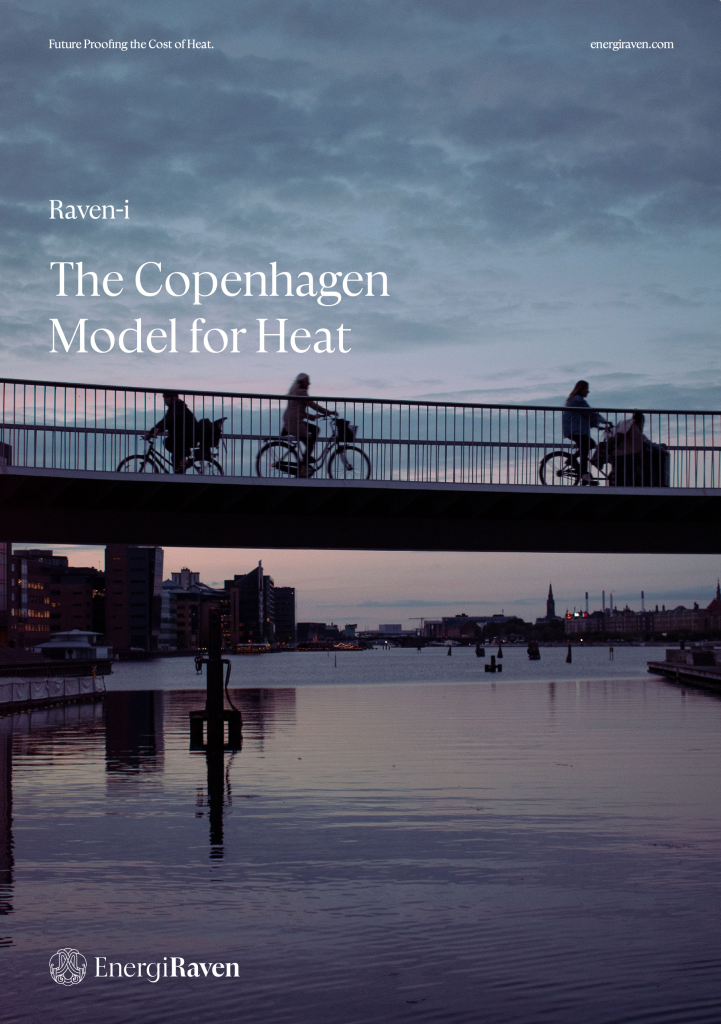
Copenhagen’s Heat Network Story Offers a Blueprint for the United Kingdom
For decades, discussions about heat networks have focused on how heat is generated. Copenhagen’s experience suggests the bigger challenge, and opportunity, may be how heat is planned, governed and shared across a city region.
In our latest Raven-i, we explore how Copenhagen developed one of the world’s most extensive district heating systems, connecting almost the entire city through infrastructure that has evolved over the past century. What began as a practical effort to make better use of surplus heat grew into a coordinated regional network that today links municipalities, energy producers and consumers across the wider capital area.
What makes Copenhagen particularly relevant is not simply the scale of its network, but the way it was delivered. Independent municipalities worked together to create shared transmission infrastructure while retaining control of their local networks. The establishment of VEKS in the 1980s demonstrated how regional collaboration could unlock opportunities that would have been difficult for individual authorities to achieve alone.
The paper examines how Denmark transformed heat from a building-level decision into a strategic element of energy planning. Infrastructure originally developed to improve energy security and efficiency has since proven capable of accommodating new technologies and lower-carbon heat sources, demonstrating the long-term value of investing in adaptable networks.
For Greater Manchester, the lessons are increasingly relevant. Heat network zoning creates an opportunity to think beyond individual projects and consider how local heat networks, regional transmission infrastructure and municipal governance can work together to create a more resilient energy system.
A central theme throughout the report is that successful heat networks are not built solely through engineering. They depend on governance, coordination and long-term planning. Copenhagen’s story shows that before the pipes were laid, the institutions needed to manage them were created.
As Greater Manchester begins to shape its heat network future, the question is no longer simply where heat will come from. It is how effectively cities can work together to connect, transport and make use of it.
Read the Full White Paper
Our full white paper explores the development of Copenhagen’s district heating network in greater detail, including the origins of Denmark’s heat planning approach, the creation of VEKS, and the lessons that heat network zoning in England can draw from a century of Danish experience.
Download the full white paper: The Copenhagen Model for Heat