Affordable Homes Need Affordable Heat.
Affordable Homes Need Affordable Heat.
An affordable rent is only part of the cost of a home. Public investment in new housing should also preserve access to lower-cost heat for the decades that follow.
Recovered Heat is The Cheapest Heat We Have.
Recovered Heat is The Cheapest Heat We Have.
Cheap to install. Expensive to escape. Electric panel heaters and exhaust air heat pumps can leave residents exposed to high electricity costs while making future connection to lower-cost heat networks impractical.
Investing in Infrastructure.
The significance of investing in heat networks goes beyond a single project. With growing support from voters, it allows multiple heat networks to connect into a larger system rather than operating in isolation.
While the pipes may last for generations, the heat sources feeding them can change over time, creating a future-proof platform for lower-cost, lower-carbon heat.
The significance of investing in heat networks goes beyond a single project. With growing support from voters, it allows multiple heat networks to connect into a larger system rather than operating in isolation.
While the pipes may last for generations, the heat sources feeding them can change over time, creating a future-proof platform for lower-cost, lower-carbon heat.
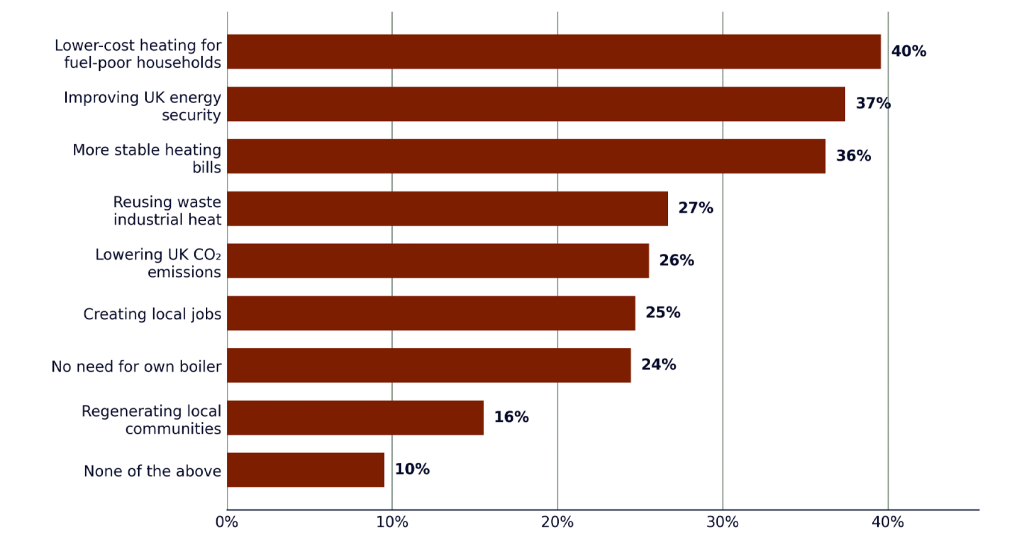

79% of Voters Support Reusing Waste Heat from Industry
Heat has become the missing test of Britain’s energy politics. Voters are being asked to support clean power, energy security and growth, yet most homes still depend on a gas system whose price is shaped by global markets and geopolitical shocks.
The public response to EnergiRaven’s Censuswide polling is clear: people want a practical alternative that uses the energy Britain already has, rather than paying to waste it.
A Backbone for the Future.
By creating a shared heat transmission main for the city, it enables multiple heat networks and heat sources to connect into a larger, more resilient system rather than operating in isolation.
The infrastructure is built to last for generations, while the heat sources connected to it can evolve over time. This creates a future-proof platform capable of delivering increasingly affordable, secure and lower-carbon heat as new opportunities emerge.
By creating a shared heat backbone for the city, it enables multiple heat networks and heat sources to connect into a larger, more resilient system rather than operating in isolation.
The infrastructure is built to last for generations, while the heat sources connected to it can evolve over time. This creates a future-proof platform capable of delivering increasingly affordable, secure and lower-carbon heat as new opportunities emerge.
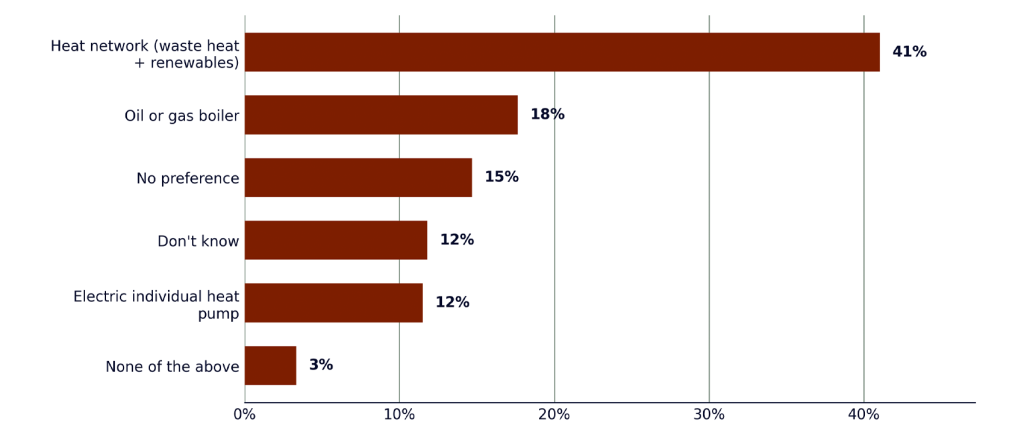
Heat That Works for Communities.
Heat networks are about more than cutting carbon. They give homes and businesses access to reliable, affordable heat that is less exposed to the shocks of global gas markets.
At the same time, heat networks keep energy investment local, unlocking regeneration, supporting growth and making better use of local heat sources. At their best, they do more than provide heat. They help create stronger, more resilient communities.
Heat networks are about more than cutting carbon. They give homes and businesses access to reliable, affordable heat that is less exposed to the shocks of global gas markets.
At the same time, heat networks keep energy investment local, unlocking regeneration, supporting growth and making better use of local heat sources. At their best, they do more than provide heat. They help create stronger, more resilient communities.
NO HEAT WASTED.
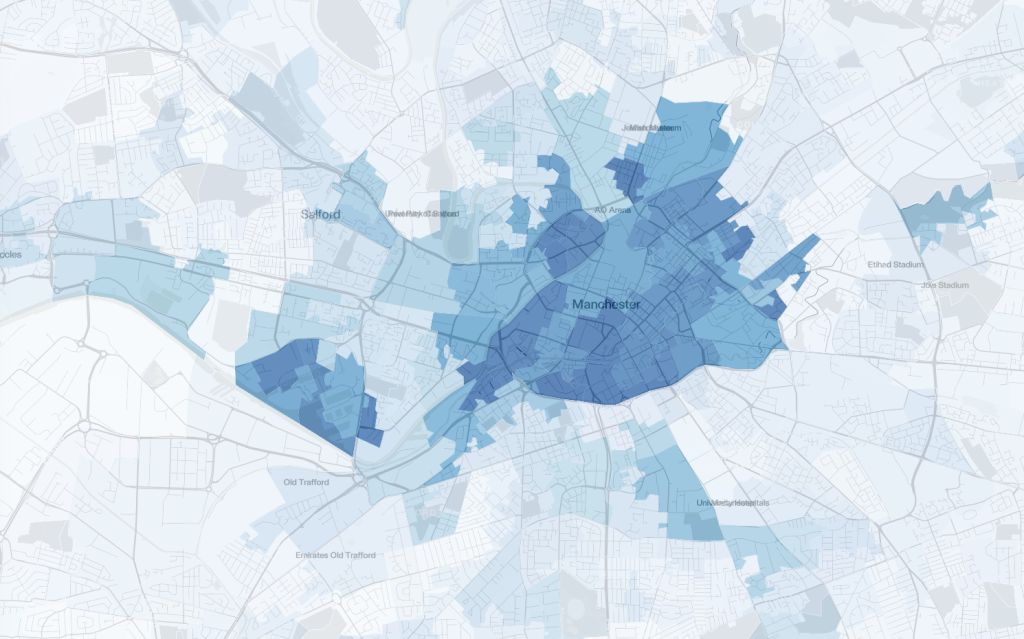
Direct electric heating risks putting more people in Manchester into fuel poverty. The Heat Highway’s modelled heat cost is 78.4% lower than direct electric heating: an illustrative annual difference of £1,323 per flat on these assumptions.

Heat Networks
Waste Heat Recovery
Large Heat Pumps
Heat Interface Units (HIUs)
Thermal Storage
Smart Heat Metering
Connecting Cities. Securing Heat.
76% Less Carbon for 70,000 Homes
A Waste Heat-led Manchester Heat Highway could cut heating emissions by more than 100,000 tonnes of CO₂ every year across 70,000 social and affordable homes. By capturing local waste heat and putting it to work, emissions could fall by around 76% compared to today’s heating mix.
More than a decarbonisation opportunity, it would turn wasted energy into a regional asset, delivering cleaner, lower-cost heat while making better use of infrastructure that already exists.

FURTHER READING


FAQs
The Manchester Heat Highway is a proposed city-wide heat network that would move low-cost heat through underground insulated pipes to homes, public buildings, businesses and new developments. Instead of each area generating its own heat separately, the Heat Highway would connect local heat network zones into one stronger system, making better use of waste heat from industry, data centres, wastewater treatment works, energy-from-waste facilities and other large-scale sources.
Large heat pumps will still have a role, but relying on them alone in every zone risks higher costs and duplicated investment. Greater Manchester already has significant sources of usable waste heat. By capturing that heat and moving it to where it is needed, the city can reduce the amount of new heat that has to be generated. Analysis by EnergiRaven with Viegand Maagøe suggests that using 85% waste heat and 15% large-scale heat sources could save £18.34 billion over 20 years compared with a zoning-only approach based on large-scale air source heat pumps in each zone.
New developments need reliable, affordable and low-carbon heat. A Heat Highway could give housing developers, regeneration areas and local heat network developers access to lower-cost recovered heat, reducing the need for each development to install its own major heat generation plant. This could lower capital costs, reduce delivery risk and help new homes connect to cleaner heat from the start.
EnergiRaven polling found strong support in Manchester. Around 70% of Manchester respondents supported the proposed Heat Highway route, with only a very small proportion opposed. The strongest reason for support was practical: lower energy bills. Respondents also supported the idea because of local investment, job creation, regional benefits and the opportunity for Greater Manchester to lead the UK’s first Heat Highway.
Yes. The proposal is inspired by the Copenhagen model, where heat is treated as strategic city infrastructure rather than something solved building by building. Copenhagen’s district heating system connects many heat sources, transmission routes, local networks and customers into one integrated system. Manchester does not need to copy Denmark exactly, but it can apply the same principle: recover useful heat where it is available, move it to where it is needed, and plan clean heat as long-term infrastructure.