Xavi Medina

Clean Heat by 2040: What can we learn from the roll-out of natural gas?

Britain likes to tell itself that large-scale infrastructure change has become too difficult: too slow, too fragmented, too politically fraught. But there is a forgotten story that challenges that assumption. In just a decade, Britain converted millions of homes and businesses from town gas to natural gas, replumbed expectations about what heating could be, and …

Clean Heat by 2040: What can we learn from the roll-out of natural gas? Read More »
Warm Homes for All Isn’t Communism

The recent burst of commentary framing heat networks as a “Soviet-style” project, or even a “communist energy plot” is misdirection.

The Telegraph recently compared modern heat networks to communist-era systems. The comparison may be catchy; but it is also technically lazy.

Who Should Own Manchester’s Heat Networks?

Manchester is approaching a decisive moment in its energy history, one that will shape the city’s energy system for generations.

As gas is phased out, the city is preparing to build heat networks to supply homes, public buildings and industry. This is not a marginal intervention. These networks will determine household bills, carbon emissions and energy resilience for the rest of the century.

 Reflections from a Danish District Heating Visit

Britain’s clean-energy transition is at a critical juncture. A visit to the International District Heating Summit in Denmark earlier this year highlighted a stark comparison: while Denmark has created one of the world’s most efficient, resilient and affordable energy systems, the UK is poised to constrain its own progress through premature and excessive regulation. The result could be a decisive setback for one of the most effective tools available for cutting carbon emissions and strengthening energy security.

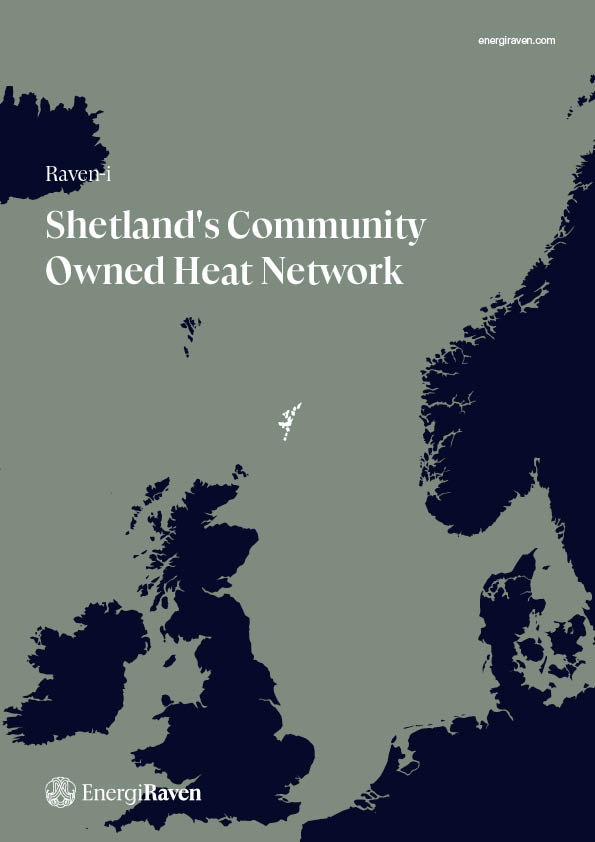
Shetland’s Community Owned Heat Network

In the windswept northern isles, the town of Lerwick has quietly achieved what much of Britain still aspires to: a functioning, affordable, low-carbon heat network. Born in 1998 out of necessity and ingenuity, the Shetland Heat Energy and Power (SHEAP) system channels warmth from waste, literally, turning refuse into reliable heat for homes and public buildings. What began as a local response to the absence of mains gas has grown into one of the UK’s longest-running and most resilient district heating networks, a testament to Shetland’s pragmatic blend of self-reliance and community spirit.

Belfast’s Heat Highway: A No-Regret Energy Investment for Generations

Belfast stands at a crossroads in its energy future. With nearly half of Northern Ireland’s households in fuel poverty and 68% still dependent on oil heating, the city urgently needs a clean, affordable alternative. The latest Raven-i explores how a Belfast Heat Highway, a long-range network transporting waste and renewable heat to local communities could transform the region’s energy system.

Raven-i - Derry Heat Highway (Rev 1 2025) Cover

How a Derry heat highway could help solve Northern Ireland’s oil crisis

Northern Ireland is in the grip of an escalating oil crisis. A 2024 poll by National Energy Action Northern Ireland revealed that approximately 68% of homes still rely on off-grid oil heating, with over 40% of adults now living in fuel poverty. Shockingly, more than a quarter of households have been forced to go without heating or electricity in the last two years due to unaffordable costs.

This situation is disturbingly familiar. In the early 1970s, Denmark faced a near-identical crisis, with 90% of its energy needs met by imported oil. But when conflict in the Middle East sent oil prices soaring by 400%, Denmark acted decisively—transforming its energy system by building large-scale heat networks, powered by waste heat, biomass, and later, excess renewable electricity.

It worked. Today, around two-thirds of Danish homes are connected to clean, efficient district heating. Fuel poverty is a rarity, and their energy system is more resilient, community-driven, and fit for the future.

Attribution

Icons are made by Freepik from www.flaticon.com