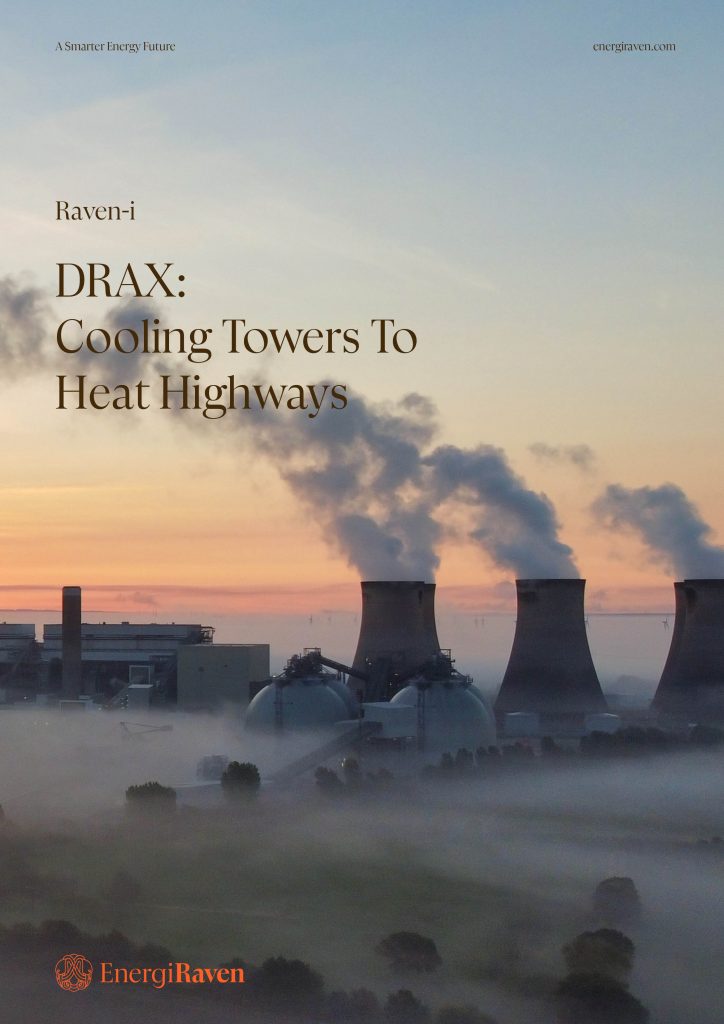
Drax has become a familiar subject of controversy, scrutinised by campaigners, journalists and Parliament alike. Much of that attention has focused on the origins of the fuel it burns. Far less attention has been paid to the energy it wastes.
For decades, one of the country’s largest power stations has rejected vast quantities of usable heat into the atmosphere and the River Ouse. This was not the result of neglect or error, but a symptom of an energy system designed to prioritise electricity alone. Heat was never treated as infrastructure; it was something to be managed locally, or not at all. That assumption held while gas was cheap, abundant and geopolitically convenient. It no longer does.
Energy security and the cost of inefficiency
The past few years have made clear that energy security cannot be taken for granted. Gas prices have proved volatile, supply chains fragile and international order unpredictable. In that context, resilience will not come from burning more primary fuel, but from using what the system already produces more intelligently. Few assets illustrate this more starkly than Drax. Like all large steam-cycle power stations, Drax converts only a fraction of its input energy into electricity. The remainder leaves the system as heat, rejected through cooling towers and cooling water. In energy terms this is not a marginal loss but the dominant flow. On an annual basis, the station consumes in the order of 35 to 37 terawatt-hours of primary energy and exports around 14 to 16 terawatt-hours of electricity. The balance – approximately 22 terawatt-hours each year – is discarded as heat.