See our latest coverage in the press.
Baked beans and poo-powered Greater Manchester plan could cut your bills by a third
Heating Greater Manchester’s homes with Baked Beans?
Could Greater Manchester’s Homes Soon Be Heated by Baked Beans?
EnergiRaven & ADE: Heat Recovery Mandate for Data Centres
Campaign seeks mandatory data centre heat recovery
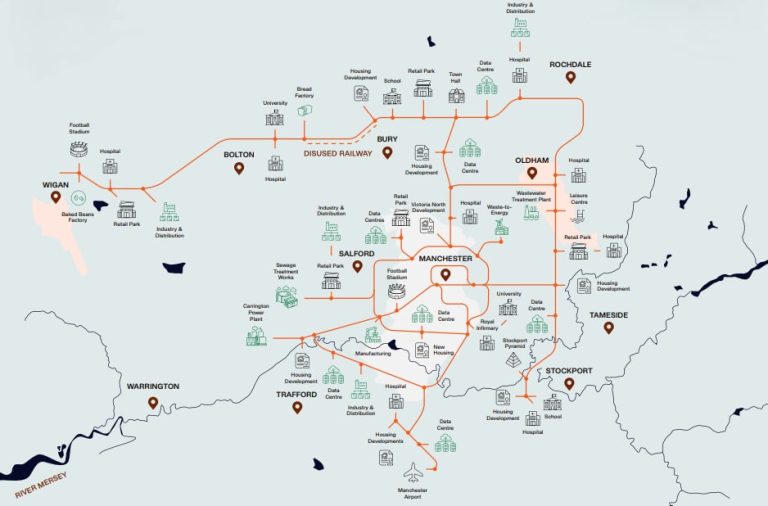
Major waste heat plan developed for Greater Manchester’s future
EnergiRaven and ADE Call for Data Centre Waste Heat Reform
Plans for Heat Network Using Waste Heat from Local Industries Announced for Greater Manchester
Homes powered by Baked Beans could be part of Greater Manchester’s future
Most Britons want data centre planning permission tied to sharing waste heat with local networks
Study: Waste heat network rollout could cut social and affordable housing energy bills by £142m
Majority of Britons want data centre planning tied to waste heat sharing
UK wants more homes heated by waste heat from datacenters
How waste heat could cut heating bills and emissions from social housing
FAQ
According to the analysis from EnergiRaven and Viegand Maagøe, the projected growth in data centres in the UK could generate enough waste heat to potentially heat 3.5 million to 6.3 million homes in the country. This represents a significant opportunity to harness this underutilised resource and provide cost-effective heating for a large number of households.
The analysis suggests that a national investment of £1 billion would be required to develop the necessary heat network infrastructure to capture and distribute the waste heat from UK data centres. This infrastructure could include heat pumps, pipelines, and other distribution systems to transport the waste heat to homes and buildings. Developing this heat network would be a significant but worthwhile investment to unlock the potential of this renewable heating source.
Using waste heat from data centres to heat homes has significant environmental benefits. It reduces the need for traditional fossil fuel-based heating, thereby lowering carbon emissions and contributing to the UK's decarbonisation efforts. Additionally, it reduces energy waste by repurposing the heat that would otherwise be lost, improving the overall efficiency of the energy system. This approach aligns with the UK's goals to transition to a more sustainable and low-carbon economy.
One of the main challenges is the geographical distribution of data centres and the homes that could potentially be heated. Ensuring an efficient and cost-effective heat distribution network that connects data centres to nearby homes and buildings is a significant logistical and infrastructural challenge. Additionally, coordinating the various stakeholders, such as data centre operators, energy providers, and local authorities, to develop and implement the necessary heat network systems can be complex.
The government can play a crucial role in facilitating the use of data centre waste heat for home heating. This could include developing policies and incentives to encourage the deployment of heat network infrastructure, providing funding for pilot projects, and ensuring the necessary regulatory frameworks are in place. Additionally, the government could promote collaboration between the data centre industry, energy companies, and local authorities to identify and implement effective waste heat recovery and distribution solutions across the country.